Critical Thinking in the Heavy Equipment Industry

Critical Thinking in the Heavy Equipment Industry

Your Essential Guide to Critical Thinking in the Heavy Equipment Industry
Critical Thinking in the Heavy Equipment Industry

Critical thinking has become an essential human skill in the Heavy Equipment Industry, where precision and efficiency are vital. Here we would like to provide a hands-on way to improving your critical thinking skills. We look at how to methodically tackle complicated problems using a four-phase approach: Understanding the Problem, Evaluating Options, Making Informed Decisions, and Reviewing and Adjusting. Equip yourself with critical thinking skills so that you can solve urgent challenges while also contributing to your organization’s long-term resilience and success.

What is Critical Thinking?

Critical Thinking entails the ability to reason logically, think clearly, and remain open-minded. It’s a crucial skill across various levels of our industry, influencing decision-making from the boardroom to the shop floor. Technicians, engineers, and operators often rely on Critical Thinking to make informed and efficient decisions, ensuring smooth operations.

The Importance of Critical Thinking

Developing Critical Thinking skills enhances problem-solving abilities and fosters a coherent understanding of the work environment. It empowers individuals to interpret, evaluate, and compare information effectively, leading to well-informed judgments. In today’s dynamic world, Critical Thinking is indispensable for navigating complexities, fostering innovation, and embracing diverse perspectives, ultimately driving more effective actions in both professional and personal spheres.

A Practical Guide to Critical Thinking

Step 1: Understand the Problem

Begin by fully grasping the problem’s intricacies before seeking solutions. This may involve dissecting mechanical failures to identify root causes in the Heavy Equipment Industry. Assess the feasibility of potential upgrades, considering factors like fuel savings versus upfront costs. Understanding the problem thoroughly lays a solid foundation for effective problem-solving, addressing underlying issues alongside immediate concerns.

Step 2: Evaluate Options

Once the problem is clear, brainstorm potential solutions and critically assess each one. Consider factors such as cost, implementation time, and long-term sustainability. Align options with both short-term needs and overarching business objectives.

Step 3: Make Informed Decisions

Utilize data and insights to make informed decisions that align with business goals and operational constraints. Incorporate Micro-Skills like logical reasoning and decision-making to select the most suitable solution for the situation.

Step 4: Review and Adjust

After implementation, evaluate outcomes and adjust strategies as necessary. Reflect on whether goals were achieved and identify areas for improvement. Continuous review allows for learning from experiences and adapting to evolving circumstances.

Critical Thinking is indispensable in our industry, enabling individuals to thrive in a dynamic environment. By understanding problems thoroughly, evaluating options wisely, making informed decisions, and continually reviewing outcomes, professionals contribute to organizational success and resilience.


If you’re eager to learn more and explore further, remember that SINTRA is here to support you every step of the way.
Give us a call at +97142498726 or send us an email at info@sampledemolinkurl.online, and we`ll take it from there!

Rev Up Your Aftermarket Business in 100 Days!

Rev Up Your Aftermarket Business in 100 Days!

Rev Up Your Aftermarket Business in 100 Days: An inventive roadmap to enhance Results and Effectiveness.


Rev Up Your Aftermarket Business in 100 Days!

The Heavy Equipment industry has seen a remarkable surge in economic growth recently, thanks to advancements in construction and mining. This surge reflects a big increase in demand, more investments, and innovative technologies changing these industries. Companies in these sectors are growing exceptionally, showing a positive outlook for the market.

Understanding these changes is crucial for spotting new business opportunities and staying relevant in a shifting market. Manufacturers and their networks must adapt after selling equipment to benefit from potential in parts, repairs, and maintenance.

In this setting, technologies that change customer experience, innovative IT systems, automated distribution centers, and changes in competition are important when creating or improving distribution channels.

Our “100 Days Scaling-Up Business Program” (100 D.A.B.S.) helps OEMs, Distributors, and SMEs navigate this transformation. In these 100 days, the program delivers tangible results by addressing customer issues and suggesting sustainable business models, leading to impactful changes and better go-to-market strategies.

The 100 D.A.B.S. program has three stages:
Stage I: Kick-Off and Gap Analysis
Stage II: Work Plan and Implementation
Stage III: Monitor and Control

It aims to improve organizational performance in key areas like After-Sales and Marketing, Pricing Strategies, Operational Efficiency, Performance Metrics, Strategies, and Management.

Our newly introduced Smart Tracking Technology, DABS.Tracker, empowers Supervisors and Aftermarket Managers by enabling real-time tracking, monitoring, and analysis of program status. This innovative tool integrates data from involved participants into a user-friendly platform, granting leaders easy access to program outcomes and effectiveness.

Upon completion of the 100 D.A.B.S. Program, Parts and Service Departments, along with Business Owners, are expected to showcase consistently high professional standards and the ability to develop strategies that bolster the company’s profitability.

For further info on our program visit: www.sintramea.com/consulting/scaling-up-aftermarket-business/
Give us a call at +97142498726 or send us an email at info@sampledemolinkurl.online, and we`ll take it from there!

Innovations Shaping Heavy Equipment’s Future

Innovations Shaping Heavy Equipment’s Future

Innovations Shaping Heavy Equipment’s Future

The construction industry is really going through a time of fast innovation! In many ways, the industry is starting to resemble technology firms, especially with the advent of telematics, autonomous machinery, and electromobility. It’s an exciting time for manufacturers and users alike, as they work together to foster this shift.

One of the biggest opportunities for businesses in this space is that they can now improve their offers with breakthrough technologies. This means that they can now assure increased machine uptime, longer equipment lifecycles, and provide tailored solutions for clients. With the incorporation of these new technologies, businesses that may have previously trailed areas like transportation and agriculture, now have a big opportunity to catch up!

So, Here are a some of the key technological breakthroughs that are currently shaping the construction equipment business:

Heavy Equipment

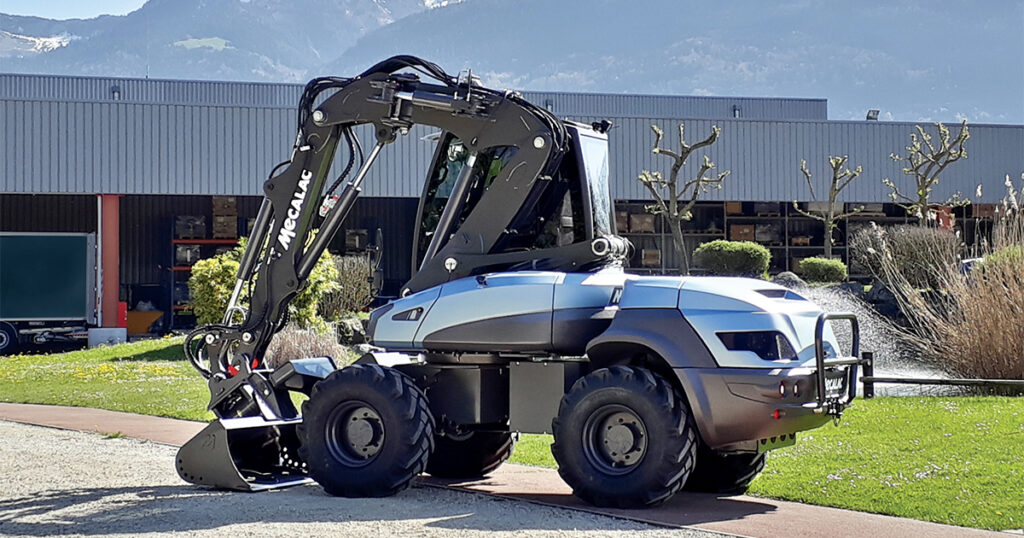
Electromobility

Hybrid and new battery technologies are being tested around the world. They are quieter, more efficient, and more sustainable. Predictive analytics/telematics, connected machines are sending tons of information that can be used for actionable predictions. For example, knowing a machine will break down enables companies to take them offline for maintenance before a jobsite is unexpectedly thrown to a halt.

Autonomous machines

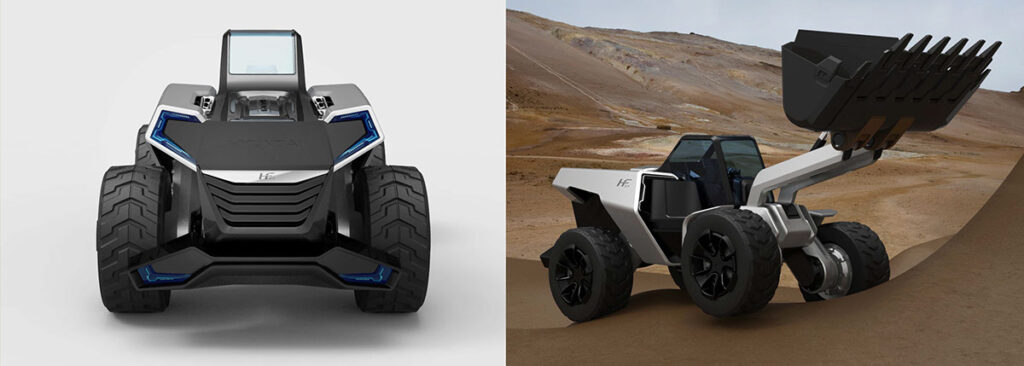
Autonomous machines are a reality and will be successful in construction long before they take over commuter roads. They’ll be used on closed sites, with limited circulation of pedestrians and other machines, before coming to the city. Remote-controlled mining is advancing mining projects, as operators control equipment from digital cockpits. This development allows for remote operation of heavy equipment miles down in a mine from a safe above-ground location. This takes humans out of dangerous conditions and helps attract new workers because it’s less dangerous, dirty, and plays more like a video game.

Artwork by Citrus design

Connected machines

Connected machines are changing the way jobsites that build skyscrapers, power plants, mines, and more operate. The machines are now communicating with one another and home base, making the work more efficient and dramatically increasing safety.

All of these breakthroughs are really exciting, and we can’t wait to see how they continue to shape the future of heavy equipment! Ready to explore the latest in heavy equipment and parts for top brands?


Give us a call at +97142498726 or send us an email at info@sampledemolinkurl.online, and we`ll take it from there!